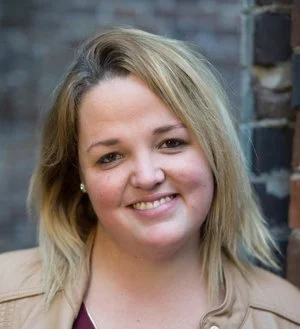
Do You Trust Me?
Read that headline again. I'm not asking whether you like me. I'm not asking whether you've heard of me. I'm asking whether you actually trust me.
Do you believe what I'm telling you? Do you understand what I'm telling you? Do you believe I can do what I say I can do?
And if I asked you for your money, your reputation, your business or your time — would you feel comfortable handing it over?
Underneath almost every business decision sits one very simple question: can I trust this person?
We answer it about people all day long without noticing we're doing it. We register how someone speaks and how they explain things, what their website looks like, the photographs, the language, whether we've heard the name before, who else appears to trust them, whether the story stays consistent, and whether any of it can actually be verified.
Sometimes we can't articulate it at all. Something just feels off.
These are trust signals, and they matter for a blunt reason: visibility gets you considered. Trust gets you chosen.
PwC research found that 93% of business executives agree that the ability to build and maintain trust improves the bottom line. Trust is not a fluffy branding concept sitting somewhere between your logo and your company values. It is commercial. It decides whether someone calls you, recommends you, introduces you, hires you, buys from you and comes back.
So let's use me as the experiment.
Why might you trust me?
Thirteen years in criminal intelligence. Hundreds of business owners. Media appearances. Awards. I speak publicly, I publish my thinking, and I'm open about what I know and — more usefully — what I don't. You can search my name, look at my work, and check whether the things I've just told you are true.
Those things are there deliberately. They are credibility signals, and there is nothing deceptive about that. If you have genuine evidence that you're good at what you do, hiding it and waiting for clients to magically discover it isn't humility. It's just bad strategy.
Other signals are running too: the photographs, the website, the language, the colours, the consistency, and the fact that what I write here is what you'll get from me on a stage, in a meeting, or across a coffee.
Even design counts. Stanford research into web credibility found that 46.1% of people assessing a website's credibility commented on its visual design.
That one is going to sting for some of you.
And all of it is being assessed before anyone has established whether you are actually brilliant at what you do.
Trust and trust signals are not the same thing
Here I want to be very clear. I have no interest in teaching people to look trustworthy when they aren't. I'm not going to help anyone manufacture credibility or build an illusion of expertise that doesn't exist.
I'm interested in the opposite problem: how do genuinely trustworthy people make that trust visible?
Awards, media, testimonials, qualifications, professional photography, good branding, a strong digital footprint — none of these makes you trustworthy. What they do is give another human being evidence to assess you with.
The strongest signal of all is verification.
Don't tell me you won the award. Let me find it. Don't tell me you appeared in the media. Let me watch the interview. Don't tell me your clients get incredible results without showing me something. Don't tell me you're an expert and then leave no body of work behind you that demonstrates it.
Real authority doesn't need to shout trust me. Real authority can say: you don't have to take my word for it — here's the evidence.
Clarity is a trust signal
Businesses routinely mistake complexity for expertise. Jargon, long words and a 43-word corporate sentence that somehow communicates nothing do not make you sound intelligent. They make you harder to understand — and if I can't understand you, I have to work much harder to decide whether I believe you.
If you genuinely understand your subject, you can help someone else understand it too.
And we badly underestimate this one: you don't have to be perfect to be trustworthy. Some of the most trust-building sentences available to you are I don't know, I got that wrong, I've changed my mind, that isn't my area, I can't promise you that, and I don't think I'm the right person for you.
Authority is not the pretence of having every answer.
Eventually the branding has to meet the behaviour
Trust gets built when what you say about yourself matches what you show, what other people say about you, and what people actually experience when they work with you.
That's the whole game.
You can have the beautiful website, the expensive photographs, the awards, the media appearances, the testimonials and a perfectly optimised LinkedIn profile — and then somebody has to actually experience you. Work with you. Buy from you. Hear you speak. Sit in the meeting. See whether you delivered what you promised.
That's where trust either holds or falls apart.
So — do you trust me?
Maybe. Maybe not. Maybe you're not there yet, and that's completely fine, because my job isn't to force it. My job is to give you enough evidence to decide for yourself.
Read my work. Look at my experience. Watch me speak. Search my name. Look at who I've worked with. Check the receipts. Then decide.
Because I have no interest in teaching people to manufacture trust. I want to teach genuinely brilliant people to make their trustworthiness visible.
They can't hire you if they can't see you. They won't hire you if they don't trust you.
So. Do you trust me?